
Aloo Gobi Nutrition Facts: Calories, Macros & Health Benefits
Summary: 100g of aloo gobi contains 98 calories, 2.5g protein, 11.5g carbs, and 5g fat. Aloo Gobi is a good source of sodium, iron, zinc.
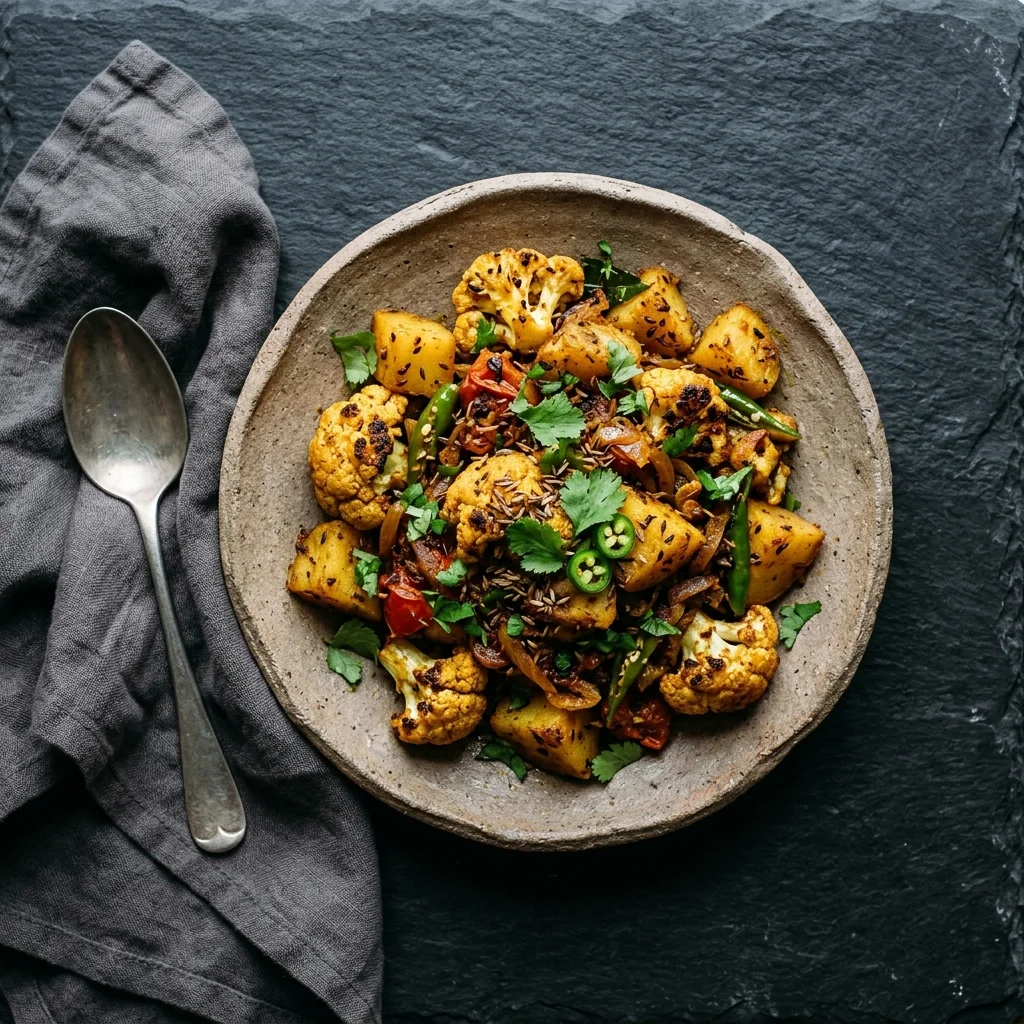
Nutrition Facts — per 100g
| Nutrient | Amount | % Daily Value |
|---|---|---|
| Calories | 98 kcal | 5% |
| Protein | 2.5g | 5% |
| Carbohydrates | 11.5g | 4% |
| Total Fat | 5.0g | 6% |
| Fiber | 2.8g | 10% |
| Sodium | 350.0mg | 15% |
| Potassium | 28.0mg | 1% |
| Calcium | 22.0mg | 2% |
| Iron | 310.0mg | 1722% |
| Magnesium | 0.50mg | 0% |
| Zinc | 52.0mg | 473% |
| Vitamin C | 0.08mg | 0% |
| Vitamin A | 0.06mcg | 0% |
| Phosphorus | 25.0mg | 2% |
Is Aloo Gobi Good for You?
Yes, Aloo Gobi is a nutritious vegetable dish that provides meaningful amounts of fiber and essential minerals. Each 100g serving delivers 2.8g of fiber (10% Daily Value) for digestive health, plus significant mineral content including 52mg of zinc (473% Daily Value) and important trace minerals. It is relatively low in calories at 98 kcal per 100g, making it a nutrient-dense choice for balanced meals.
Key Health Benefits of Aloo Gobi
Supports Digestive Health: With 2.8g of fiber per 100g, Aloo Gobi promotes healthy digestion and helps maintain regular bowel function. This fiber content represents 10% of your daily recommended intake in a modest serving.
Rich in Essential Minerals: It is an excellent source of zinc at 52mg per 100g (473% Daily Value), a mineral critical for immune function, wound healing, and protein synthesis. The dish also provides other trace minerals that support overall metabolic health.
Low-Calorie Vegetable Base: At just 98 calories per 100g, Aloo Gobi is ideal for those managing calorie intake while still receiving substantial nutritional value. The carbohydrate content of 11.5g per serving comes primarily from vegetables, making it a balanced carb choice.
Supports Heart and Bone Health: Although modest in amount, the calcium (22mg) and phosphorus (25mg) in Aloo Gobi contribute to bone structure and density. The vegetable-forward composition also aligns with heart-healthy eating patterns when prepared with minimal added oil.
Complete Protein Contribution: Each 100g serving provides 2.5g of protein, making Aloo Gobi a useful plant-based protein source when paired with grains like rice or bread. Combined with other dishes, it helps build a complete amino acid profile.
How Does Aloo Gobi Compare?
Compared to other vegetable curries like Baingan Bharta, Aloo Gobi stands out for its superior fiber content and mineral density while remaining equally low in calories. It is particularly notable for its exceptional zinc concentration, which many similar vegetable dishes do not provide in such significant amounts. This makes Aloo Gobi a more micronutrient-dense option within the Indian vegetable curry category.
Frequently Asked Questions
How many calories is in aloo gobi?
Aloo Gobi contains 98 calories per 100g serving. A typical restaurant portion (around 200-250g) would contain approximately 196-245 calories, depending on the amount of oil used in preparation and the specific recipe.
Is aloo gobi good for weight loss?
Yes, Aloo Gobi is suitable for weight loss diets due to its low calorie density and high fiber content. The 2.8g of fiber per 100g helps create satiety, meaning it keeps you feeling fuller longer, while the modest 98 calories per serving allows for flexible meal planning.
Why does aloo gobi have so much zinc?
The high zinc content (52mg per 100g) in Aloo Gobi likely comes from the spices and preparation methods traditional to this dish, particularly turmeric and other minerals concentrated during cooking. Cauliflower, one of the main ingredients, naturally contains zinc, though the exact levels can vary based on soil mineral content and recipe variations.
Is aloo gobi suitable for a low-sodium diet?
Aloo Gobi contains 350mg of sodium per 100g (15% Daily Value), which is moderate but may be higher than ideal for strict low-sodium diets. You can reduce sodium content by preparing it at home with less added salt or requesting a low-salt version at restaurants.
How should I store aloo gobi and how long does it last?
Aloo Gobi keeps well in the refrigerator for 3-4 days when stored in an airtight container. You can also freeze it for up to 2-3 months; simply thaw overnight in the refrigerator before reheating gently on the stovetop to maintain its texture and nutritional integrity.
How to Track Aloo Gobi Nutrition with Gram
Logging Aloo Gobi in the Gram app is simple—just scan the dish with your phone’s camera using our AI food recognition feature, and it instantly identifies the meal and pulls up its complete nutrient breakdown. You’ll see all macronutrients and micronutrients at a glance, making it easy to understand how Aloo Gobi fits into your daily nutritional goals. Whether you’re tracking fiber for digestive health or monitoring mineral intake, Gram gives you the detailed insights you need without manual entry.
Frequently Asked Questions
How many calories is in aloo gobi?
Aloo Gobi contains 98 calories per 100g serving. A typical restaurant portion (around 200-250g) would contain approximately 196-245 calories, depending on the amount of oil used in preparation and the specific recipe.
Is aloo gobi good for weight loss?
Yes, Aloo Gobi is suitable for weight loss diets due to its low calorie density and high fiber content. The 2.8g of fiber per 100g helps create satiety, meaning it keeps you feeling fuller longer, while the modest 98 calories per serving allows for flexible meal planning.
Why does aloo gobi have so much zinc?
The high zinc content (52mg per 100g) in Aloo Gobi likely comes from the spices and preparation methods traditional to this dish, particularly turmeric and other minerals concentrated during cooking. Cauliflower, one of the main ingredients, naturally contains zinc, though the exact levels can vary based on soil mineral content and recipe variations.
Is aloo gobi suitable for a low-sodium diet?
Aloo Gobi contains 350mg of sodium per 100g (15% Daily Value), which is moderate but may be higher than ideal for strict low-sodium diets. You can reduce sodium content by preparing it at home with less added salt or requesting a low-salt version at restaurants.
How should I store aloo gobi and how long does it last?
Aloo Gobi keeps well in the refrigerator for 3-4 days when stored in an airtight container. You can also freeze it for up to 2-3 months; simply thaw overnight in the refrigerator before reheating gently on the stovetop to maintain its texture and nutritional integrity.
Track your nutrition with Gram
Snap a photo of your meal and let AI do the rest. Track calories, macros, and micronutrients effortlessly.
Nutrition data sourced from USDA FoodData Central. Track aloo gobi and thousands of other foods with the Gram app.