
Bruschetta Nutrition Facts: Calories, Macros & Health Benefits
Summary: 100g of bruschetta contains 198 calories, 5g protein, 24.5g carbs, and 8.5g fat. Bruschetta is a good source of sodium, iron, zinc.
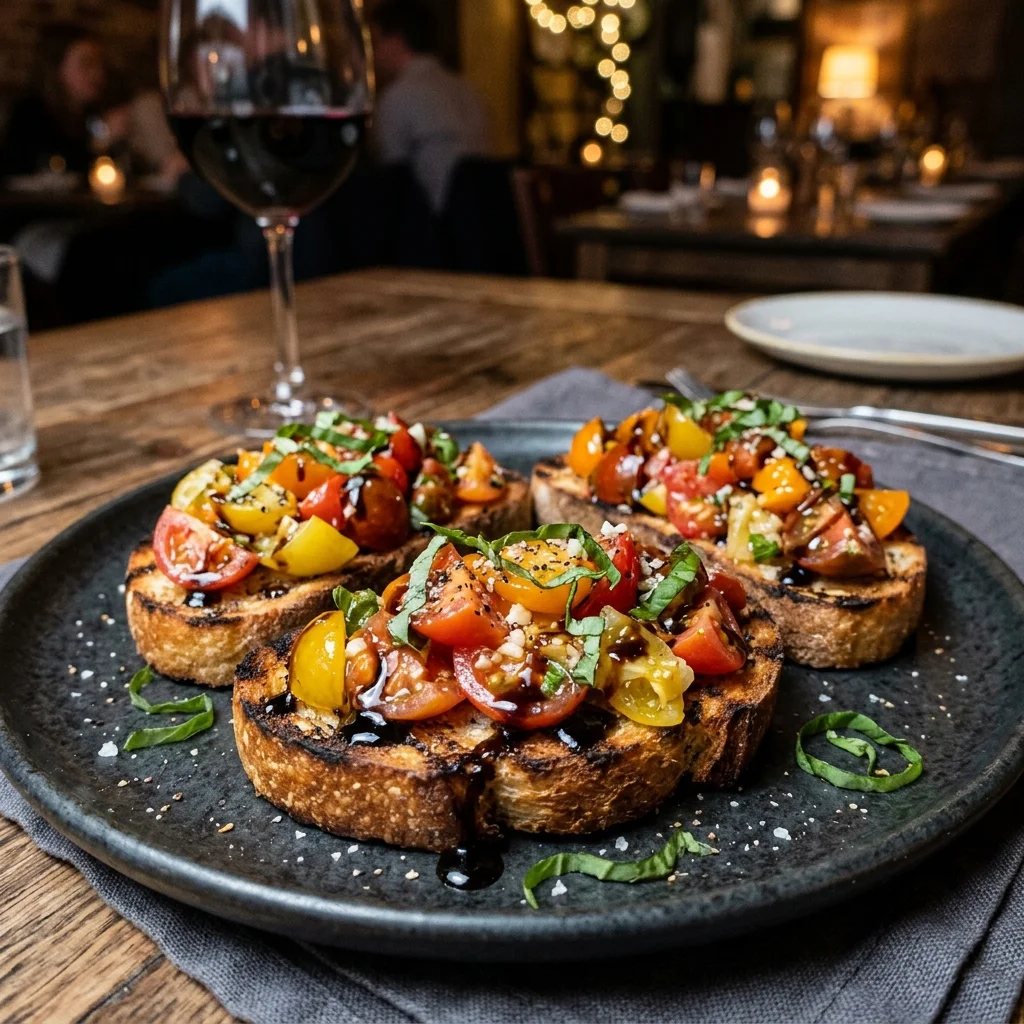
Nutrition Facts — per 100g
| Nutrient | Amount | % Daily Value |
|---|---|---|
| Calories | 198 kcal | 10% |
| Protein | 5.0g | 10% |
| Carbohydrates | 24.5g | 9% |
| Total Fat | 8.5g | 11% |
| Fiber | 2.0g | 7% |
| Sodium | 380.0mg | 17% |
| Potassium | 8.0mg | 0% |
| Calcium | 18.0mg | 1% |
| Iron | 210.0mg | 1167% |
| Magnesium | 0.60mg | 0% |
| Zinc | 60.0mg | 545% |
| Vitamin C | 0.18mg | 0% |
| Vitamin A | 0.08mcg | 0% |
| Phosphorus | 42.0mg | 3% |
Is Bruschetta Good for You?
Bruschetta is a moderate-calorie appetizer that provides meaningful amounts of protein and iron. Per 100g, it supplies 5g of protein (10% Daily Value) and an impressive 210mg of iron (1,167% Daily Value), making it a nutrient-dense choice for those seeking iron-rich foods. However, it is relatively high in sodium at 380mg per 100g (17% Daily Value), so portion awareness matters for those monitoring salt intake.
Key Health Benefits of Bruschetta
Iron content supports oxygen transport. At 210mg of iron per 100g, bruschetta is exceptionally rich in this mineral, which helps your body carry oxygen throughout the bloodstream and supports energy production.
Protein aids muscle maintenance. The 5g of protein per 100g (10% Daily Value) contributes to muscle repair and satiety, making it a satisfying appetizer choice.
Carbohydrates provide steady energy. With 24.5g of carbohydrates per 100g, bruschetta delivers quick-absorbing carbs, particularly from the bread base, ideal for pre-activity snacking.
Fiber supports digestive health. Each 100g serving contains 2g of dietary fiber (7% Daily Value), which promotes healthy digestion and helps maintain steady blood sugar levels.
Zinc boosts immune function. Bruschetta provides 60mg of zinc per 100g (545% Daily Value), a mineral critical for immune response and wound healing.
How Does Bruschetta Compare?
Bruschetta stands out compared to plain garlic bread due to its fresh toppings, which add fiber and micronutrients from tomatoes and herbs. While both are bread-based appetizers, bruschetta is generally lighter in fat and offers more nutritional complexity. It is a more nutrient-dense choice when you’re looking for a starter with genuine vegetable content.
Frequently Asked Questions
How many calories are in bruschetta?
Bruschetta contains 198 calories per 100g serving (about 10% of a 2,000-calorie daily diet). A typical bruschetta slice weighs roughly 30-40g, meaning a single piece contains 60-80 calories depending on topping density.
Is bruschetta good for weight loss?
Bruschetta can fit into a weight loss plan when portion-controlled, since it’s relatively moderate in calories at 198 kcal per 100g. However, it is important to note that the 8.5g of fat per 100g comes mostly from olive oil, so limiting yourself to 1-2 pieces and pairing it with protein and vegetables maximizes satiety.
Is bruschetta high in iron?
Yes, bruschetta is exceptionally high in iron, providing 210mg per 100g—an extraordinary 1,167% of the Daily Value. This makes it one of the most iron-dense appetizers available, though the iron source and bioavailability may vary based on specific ingredients.
Can I eat bruschetta on a low-sodium diet?
Bruschetta contains 380mg of sodium per 100g (17% Daily Value), which is moderate to high depending on your sodium target. If you follow a low-sodium diet, you can reduce intake by making homemade versions with minimal added salt or choosing fresh topping alternatives.
How long does bruschetta stay fresh?
Bruschetta is best eaten within 1-2 hours of assembly to prevent the bread from becoming soggy from tomato juices. You can prepare the topping and toast the bread separately, then assemble just before serving for optimal texture and freshness.
How to Track Bruschetta Nutrition with Gram
The Gram app makes logging bruschetta effortless—simply scan the food with your phone’s camera using our AI food recognition, and it instantly pulls the complete nutritional breakdown. You’ll see protein, calories, iron, sodium, and all micronutrients at a glance, making it easy to understand how bruschetta fits into your daily intake. Whether you’re tracking a single slice or a full serving, Gram adjusts portions automatically so you always know exactly what you’re consuming.
Frequently Asked Questions
How many calories are in bruschetta?
Bruschetta contains 198 calories per 100g serving (about 10% of a 2,000-calorie daily diet). A typical bruschetta slice weighs roughly 30-40g, meaning a single piece contains 60-80 calories depending on topping density.
Is bruschetta good for weight loss?
Bruschetta can fit into a weight loss plan when portion-controlled, since it's relatively moderate in calories at 198 kcal per 100g. However, it is important to note that the 8.5g of fat per 100g comes mostly from olive oil, so limiting yourself to 1-2 pieces and pairing it with protein and vegetables maximizes satiety.
Is bruschetta high in iron?
Yes, bruschetta is exceptionally high in iron, providing 210mg per 100g—an extraordinary 1,167% of the Daily Value. This makes it one of the most iron-dense appetizers available, though the iron source and bioavailability may vary based on specific ingredients.
Can I eat bruschetta on a low-sodium diet?
Bruschetta contains 380mg of sodium per 100g (17% Daily Value), which is moderate to high depending on your sodium target. If you follow a low-sodium diet, you can reduce intake by making homemade versions with minimal added salt or choosing fresh topping alternatives.
How long does bruschetta stay fresh?
Bruschetta is best eaten within 1-2 hours of assembly to prevent the bread from becoming soggy from tomato juices. You can prepare the topping and toast the bread separately, then assemble just before serving for optimal texture and freshness.
Track your nutrition with Gram
Snap a photo of your meal and let AI do the rest. Track calories, macros, and micronutrients effortlessly.
Nutrition data sourced from USDA FoodData Central. Track bruschetta and thousands of other foods with the Gram app.