
Corn Flakes Nutrition Facts: Calories, Macros & Health Benefits
Summary: 100g of corn flakes contains 357 calories, 7.5g protein, 84g carbs, and 0.4g fat. Corn Flakes are a good source of sodium.
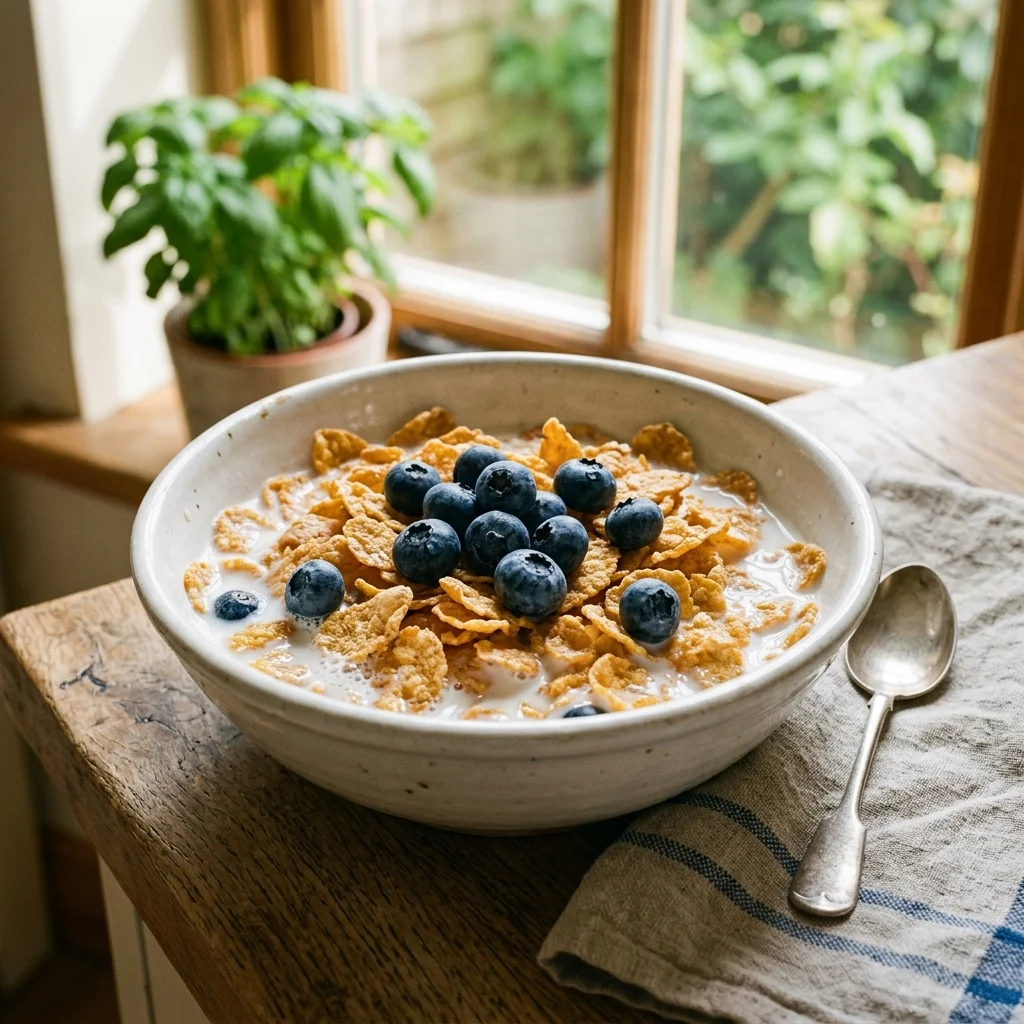
Nutrition Facts — per 100g
| Nutrient | Amount | % Daily Value |
|---|---|---|
| Calories | 357 kcal | 18% |
| Protein | 7.5g | 15% |
| Carbohydrates | 84.0g | 31% |
| Total Fat | 0.40g | 1% |
| Fiber | 3.0g | 11% |
| Sodium | 729.0mg | 32% |
Are Corn Flakes Good for You?
Corn Flakes are a fortified cereal with moderate nutritional value, offering 7.5g of protein per 100g (15% Daily Value) and 3g of fiber (11% Daily Value). However, they are relatively high in sodium at 729mg per 100g (32% Daily Value), which may be a concern for those monitoring salt intake. They’re best enjoyed as part of a balanced diet rather than as a primary nutrition source.
Key Health Benefits of Corn Flakes
High in Protein for a Cereal — With 7.5g of protein per 100g, Corn Flakes help support muscle maintenance and satiety when paired with milk or yogurt, making them more filling than lower-protein alternatives.
Good Source of Dietary Fiber — They contain 3g of fiber per 100g (11% Daily Value), which aids digestive health and helps maintain steady blood sugar levels throughout the morning.
Low in Fat — At just 0.4g total fat per 100g (1% Daily Value), they are an excellent choice for those following a low-fat diet or looking to reduce saturated fat intake.
Fortified with Essential Nutrients — Most Corn Flakes are enriched with B vitamins and iron, helping fill nutritional gaps and supporting energy metabolism and oxygen transport.
Calorie-Controlled Option — Providing 357 kcal per 100g, they allow for portion-controlled servings that fit within most calorie goals when measured carefully.
How Does Corn Flakes Compare?
Compared to granola, Corn Flakes are significantly lower in fat and calories while offering similar protein content. They are also less calorie-dense than muesli but may contain more added sodium than some whole-grain alternatives. For those seeking a lighter, less indulgent cereal option, Corn Flakes deliver comparable nutrition with a crispier, less sweet profile.
Frequently Asked Questions
How many calories are in corn flakes?
A 100g serving of Corn Flakes contains 357 calories (18% of a 2,000-calorie daily diet). A typical breakfast bowl with about 30g of cereal provides roughly 107 calories, making them a relatively light option when portion-controlled.
Are corn flakes good for weight loss?
Corn Flakes can support weight loss goals due to their low fat content and moderate calorie density when measured properly. However, they should be paired with high-protein foods like Greek yogurt or milk to increase satiety and prevent overeating later in the day.
How much sodium is in corn flakes?
Corn Flakes contain 729mg of sodium per 100g, which represents 32% of the Daily Value—making them relatively high in salt. This is worth noting for anyone managing hypertension or following a low-sodium diet, as a typical serving can contribute significantly to daily sodium limits.
Are corn flakes suitable for a gluten-free diet?
Original Corn Flakes are not certified gluten-free, as they may contain traces of gluten during manufacturing. Those with celiac disease should look for specially labeled gluten-free cereal alternatives, though some brands do offer gluten-free corn flake options.
How should I store corn flakes to keep them fresh?
Store Corn Flakes in an airtight container or keep the original box sealed tightly after opening to maintain crispness and prevent staleness. Keep them in a cool, dry place away from moisture and direct sunlight, and they’ll typically stay fresh for 2-3 months after opening.
How to Track Corn Flakes Nutrition with Gram
With the Gram app, logging Corn Flakes takes just seconds—simply search the product, scan the barcode with your phone’s camera, or use AI food recognition to identify them in your bowl. You’ll instantly see a complete nutrient breakdown including calories, protein, sodium, and fiber, making it easy to understand exactly how they fit into your daily nutrition targets and dietary goals.
Frequently Asked Questions
How many calories are in corn flakes?
A 100g serving of Corn Flakes contains 357 calories (18% of a 2,000-calorie daily diet). A typical breakfast bowl with about 30g of cereal provides roughly 107 calories, making them a relatively light option when portion-controlled.
Are corn flakes good for weight loss?
Corn Flakes can support weight loss goals due to their low fat content and moderate calorie density when measured properly. However, they should be paired with high-protein foods like Greek yogurt or milk to increase satiety and prevent overeating later in the day.
How much sodium is in corn flakes?
Corn Flakes contain 729mg of sodium per 100g, which represents 32% of the Daily Value—making them relatively high in salt. This is worth noting for anyone managing hypertension or following a low-sodium diet, as a typical serving can contribute significantly to daily sodium limits.
Are corn flakes suitable for a gluten-free diet?
Original Corn Flakes are not certified gluten-free, as they may contain traces of gluten during manufacturing. Those with celiac disease should look for specially labeled gluten-free cereal alternatives, though some brands do offer gluten-free corn flake options.
How should I store corn flakes to keep them fresh?
Store Corn Flakes in an airtight container or keep the original box sealed tightly after opening to maintain crispness and prevent staleness. Keep them in a cool, dry place away from moisture and direct sunlight, and they'll typically stay fresh for 2-3 months after opening.
Track your nutrition with Gram
Snap a photo of your meal and let AI do the rest. Track calories, macros, and micronutrients effortlessly.
Nutrition data sourced from USDA FoodData Central. Track corn flakes and thousands of other foods with the Gram app.