
Ginisang Sayote Nutrition Facts: Calories, Macros & Health Benefits
Summary: 100g of ginisang sayote contains 72 calories, 3.8g protein, 5.8g carbs, and 4.1g fat. Ginisang Sayote is a good source of essential vitamins and minerals.
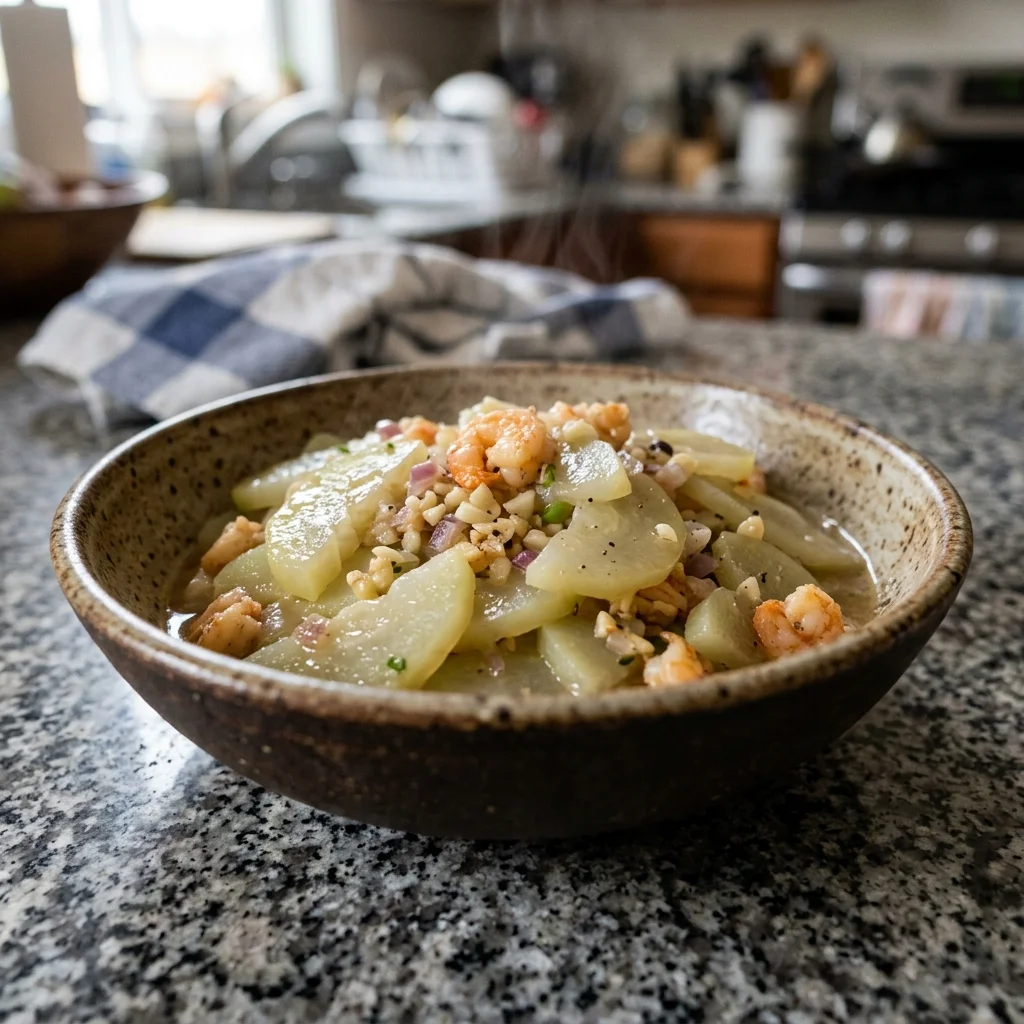
Nutrition Facts — per 100g
| Nutrient | Amount | % Daily Value |
|---|---|---|
| Calories | 72 kcal | 4% |
| Protein | 3.8g | 8% |
| Carbohydrates | 5.8g | 2% |
| Total Fat | 4.1g | 5% |
| Fiber | 1.7g | 6% |
| Sodium | 178.0mg | 8% |
Is Ginisang Sayote Good for You?
Yes, Ginisang Sayote is a nutritious vegetable dish that supports healthy eating. Per 100g, it provides 3.8g of protein (8% Daily Value), 1.7g of fiber (6% Daily Value), and only 72 calories (4% Daily Value), making it an excellent low-calorie addition to balanced meals.
Key Health Benefits of Ginisang Sayote
Low in calories for weight management – At just 72 kcal per 100g serving, it is ideal for those watching their caloric intake without sacrificing nutrition or satisfaction.
Good source of plant-based protein – With 3.8g of protein per 100g, it is a decent plant protein option that supports muscle maintenance and tissue repair, particularly valuable in vegetarian diets.
Contains beneficial fiber – The 1.7g of fiber per serving aids digestive health and promotes regular bowel movements, contributing to overall gut wellness.
Low sodium option – At 178mg per 100g (8% Daily Value), it is relatively moderate in sodium compared to many prepared dishes, making it suitable for those monitoring salt intake.
Provides essential micronutrients – Beyond the macronutrients listed, the sayote vegetable base offers vitamins and minerals that support immune function and overall metabolic health.
How Does Ginisang Sayote Compare?
Ginisang Sayote stands out among vegetable dishes for its exceptional calorie-to-nutrition ratio. Compared to similar stir-fried vegetable preparations, it is lighter while still delivering meaningful amounts of protein and fiber, making it a smarter choice for nutritionally dense, low-calorie meals.
Frequently Asked Questions
How many calories is in ginisang sayote?
Ginisang Sayote contains approximately 72 calories per 100g serving. A typical restaurant portion (around 150-200g) would range from 108 to 144 calories, making it a very light vegetable dish.
Is ginisang sayote good for weight loss?
Yes, it is an excellent choice for weight loss diets. With only 72 calories per 100g and 1.7g of fiber to promote satiety, it is nutrient-dense without excess calories, allowing you to eat satisfying portions while maintaining a caloric deficit.
Does ginisang sayote have enough protein for muscle building?
At 3.8g of protein per 100g, it is moderate in protein and works best as a side dish rather than a primary protein source. Pairing it with animal proteins like fish, chicken, or eggs will provide adequate amino acids for muscle development.
Can I eat ginisang sayote on a low-sodium diet?
It is reasonably low in sodium at 178mg per 100g, though this depends on how much salt is added during preparation. To keep it within strict sodium limits, you can request it prepared with minimal added salt or prepare it at home with controlled seasoning.
How should I store leftover ginisang sayote?
Store it in an airtight container in the refrigerator for up to 3-4 days. It is best consumed fresh, but you can reheat it gently on the stovetop or microwave—avoid prolonged storage as the sayote may become mushy and lose texture.
How to Track Ginisang Sayote Nutrition with Gram
The Gram app makes logging Ginisang Sayote effortless—simply use the AI food scanner to photograph your dish, and it automatically identifies the food and portion size. You’ll instantly see a complete nutrient breakdown including calories, protein, fiber, and sodium, helping you stay accountable to your nutritional goals throughout the day.
Frequently Asked Questions
How many calories is in ginisang sayote?
Ginisang Sayote contains approximately 72 calories per 100g serving. A typical restaurant portion (around 150-200g) would range from 108 to 144 calories, making it a very light vegetable dish.
Is ginisang sayote good for weight loss?
Yes, it is an excellent choice for weight loss diets. With only 72 calories per 100g and 1.7g of fiber to promote satiety, it is nutrient-dense without excess calories, allowing you to eat satisfying portions while maintaining a caloric deficit.
Does ginisang sayote have enough protein for muscle building?
At 3.8g of protein per 100g, it is moderate in protein and works best as a side dish rather than a primary protein source. Pairing it with animal proteins like fish, chicken, or eggs will provide adequate amino acids for muscle development.
Can I eat ginisang sayote on a low-sodium diet?
It is reasonably low in sodium at 178mg per 100g, though this depends on how much salt is added during preparation. To keep it within strict sodium limits, you can request it prepared with minimal added salt or prepare it at home with controlled seasoning.
How should I store leftover ginisang sayote?
Store it in an airtight container in the refrigerator for up to 3-4 days. It is best consumed fresh, but you can reheat it gently on the stovetop or microwave—avoid prolonged storage as the sayote may become mushy and lose texture.

Track your nutrition with Gram
Snap a photo of your meal and let AI do the rest. Track calories, macros, and micronutrients effortlessly.
Nutrition data sourced from USDA FoodData Central. Track ginisang sayote and thousands of other foods with the Gram app.