
Khichdi Nutrition Facts: Calories, Macros & Health Benefits
Summary: 100g of khichdi contains 105 calories, 4.5g protein, 16.5g carbs, and 2.2g fat. Khichdi is a good source of sodium, iron, zinc.
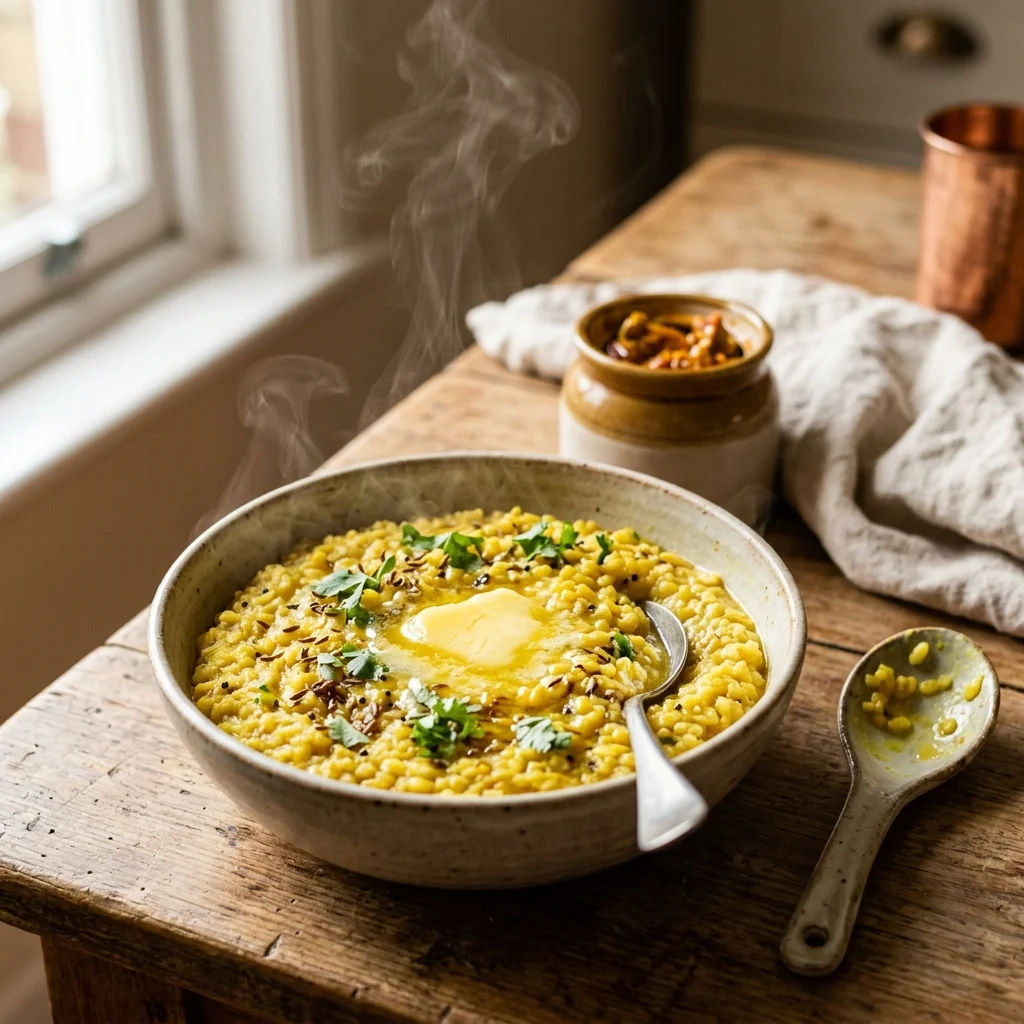
Nutrition Facts — per 100g
| Nutrient | Amount | % Daily Value |
|---|---|---|
| Calories | 105 kcal | 5% |
| Protein | 4.5g | 9% |
| Carbohydrates | 16.5g | 6% |
| Total Fat | 2.2g | 3% |
| Fiber | 1.5g | 5% |
| Sodium | 280.0mg | 12% |
| Potassium | 0.50mg | 0% |
| Calcium | 25.0mg | 2% |
| Iron | 100.0mg | 556% |
| Magnesium | 0.70mg | 0% |
| Zinc | 65.0mg | 591% |
| Vitamin C | 0.08mg | 0% |
| Vitamin A | 0.04mcg | 0% |
| Phosphorus | 5.0mg | 0% |
Is Khichdi Good for You?
Yes, khichdi is nutritionally beneficial, particularly as a source of essential minerals. A 100g serving delivers 100mg of iron (556% Daily Value) and 65mg of zinc (591% Daily Value), making it exceptionally mineral-dense. It is also a decent source of protein at 4.5g per serving, supporting muscle maintenance and recovery.
Key Health Benefits of Khichdi
Iron powerhouse for energy and oxygen transport — With 100mg of iron per 100g, khichdi is one of the most iron-rich foods available. This mineral is critical for preventing anemia and maintaining healthy red blood cell function, making it especially valuable for vegetarians and those at risk of iron deficiency.
Zinc support for immune function — Khichdi’s 65mg of zinc per serving (591% Daily Value) strengthens immune response and aids wound healing. This makes it is particularly beneficial during cold and flu season or for anyone recovering from illness.
Moderate protein for satiety — At 4.5g of protein per 100g, khichdi provides meaningful protein content that helps you feel fuller longer. This gentle protein level makes it suitable for recovery meals and light dinners without being heavy.
Easily digestible carbohydrates — The 16.5g of carbohydrates per serving provide sustained energy while remaining gentle on the digestive system. Combined with 1.5g of fiber, khichdi supports steady blood sugar levels and digestive health.
Low-fat comfort food option — With only 2.2g of fat per 100g, khichdi is a heart-conscious choice that doesn’t sacrifice flavor or satisfaction.
How Does Khichdi Compare?
Compared to white rice (which contains minimal iron and zinc), khichdi stands out dramatically due to its mineral density. While a similar portion of plain rice provides negligible amounts of these essential minerals, khichdi’s iron and zinc content makes it substantially more nutrient-dense. This difference reflects khichdi’s combination of rice, lentils, and traditional preparation methods that enhance mineral availability.
Frequently Asked Questions
How many calories is in khichdi?
Khichdi contains 105 calories per 100g serving, making it is a relatively low-calorie option for a complete grain-and-legume dish. A typical 1-cup serving (around 200g) would contain approximately 210 calories.
Is khichdi good for weight loss?
Yes, khichdi can support weight loss goals thanks to its low calorie density (105 kcal per 100g) and moderate protein content (4.5g). The combination of protein and fiber promotes satiety, helping you feel satisfied with smaller portions throughout the day.
Does khichdi contain enough iron for anemia?
Khichdi is an exceptional source of iron, providing 100mg per 100g—which delivers 556% of the Daily Value in a single serving. However, the iron in plant-based khichdi is non-heme iron, which is less readily absorbed than heme iron from meat; pairing it is with vitamin C sources can improve absorption.
Is khichdi suitable for a low-sodium diet?
Khichdi contains 280mg of sodium per 100g (12% Daily Value), which is moderate but may be high for those following strict low-sodium diets. You can reduce sodium content by preparing khichdi at home with minimal added salt rather than consuming store-bought or restaurant versions.
Can I meal prep khichdi and store it?
Yes, khichdi stores well in the refrigerator for 3-4 days in an airtight container, making it ideal for meal prep. You can also freeze khichdi for up to 3 months; simply reheat gently on the stovetop or microwave with a splash of water to restore its texture.
How to Track Khichdi Nutrition with Gram
The Gram app makes tracking khichdi effortless—simply scan the barcode or search “khichdi” in the food database to instantly see the complete nutritional breakdown. Whether you’re logging homemade or packaged khichdi, the app calculates exactly how the meal fits into your daily nutrient targets, from iron and zinc to calories and protein.
Frequently Asked Questions
How many calories is in khichdi?
Khichdi contains 105 calories per 100g serving, making it is a relatively low-calorie option for a complete grain-and-legume dish. A typical 1-cup serving (around 200g) would contain approximately 210 calories.
Is khichdi good for weight loss?
Yes, khichdi can support weight loss goals thanks to its low calorie density (105 kcal per 100g) and moderate protein content (4.5g). The combination of protein and fiber promotes satiety, helping you feel satisfied with smaller portions throughout the day.
Does khichdi contain enough iron for anemia?
Khichdi is an exceptional source of iron, providing 100mg per 100g—which delivers 556% of the Daily Value in a single serving. However, the iron in plant-based khichdi is non-heme iron, which is less readily absorbed than heme iron from meat; pairing it is with vitamin C sources can improve absorption.
Is khichdi suitable for a low-sodium diet?
Khichdi contains 280mg of sodium per 100g (12% Daily Value), which is moderate but may be high for those following strict low-sodium diets. You can reduce sodium content by preparing khichdi at home with minimal added salt rather than consuming store-bought or restaurant versions.
Can I meal prep khichdi and store it?
Yes, khichdi stores well in the refrigerator for 3-4 days in an airtight container, making it ideal for meal prep. You can also freeze khichdi for up to 3 months; simply reheat gently on the stovetop or microwave with a splash of water to restore its texture.
Track your nutrition with Gram
Snap a photo of your meal and let AI do the rest. Track calories, macros, and micronutrients effortlessly.
Nutrition data sourced from USDA FoodData Central. Track khichdi and thousands of other foods with the Gram app.