
Maggi Noodles Nutrition Facts: Calories, Macros & Health Benefits
Summary: 100g of maggi noodles contains 470 calories, 10g protein, 61g carbs, and 18g fat. Maggi Noodles are a good source of sodium.
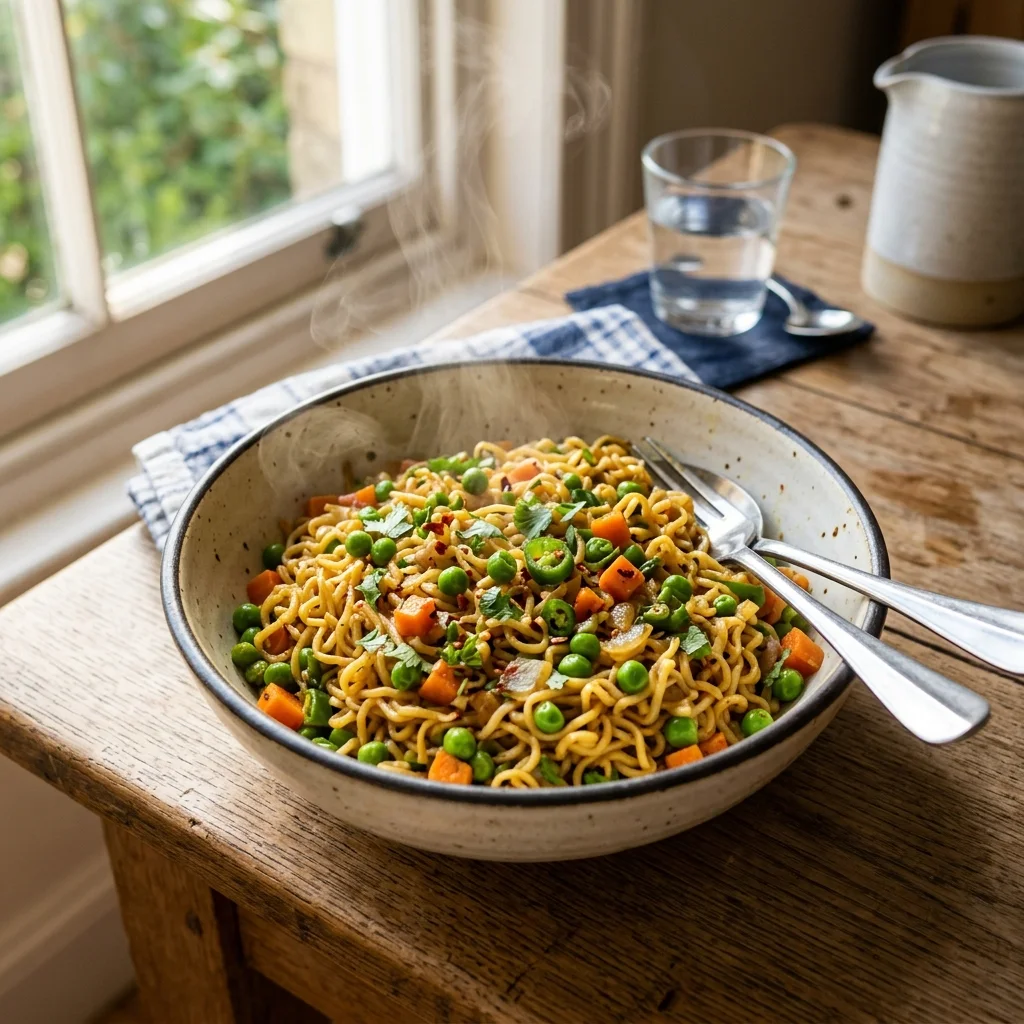
Nutrition Facts — per 100g
| Nutrient | Amount | % Daily Value |
|---|---|---|
| Calories | 470 kcal | 24% |
| Protein | 10.0g | 20% |
| Carbohydrates | 61.0g | 22% |
| Total Fat | 18.0g | 23% |
| Fiber | 3.0g | 11% |
| Sodium | 1200.0mg | 52% |
Are Maggi Noodles Good for You?
Maggi Noodles are a convenient source of protein and carbohydrates, providing 10g of protein (20% Daily Value) and 61g of carbs per 100g serving. However, they are quite high in sodium at 1200mg (52% Daily Value), which exceeds half your recommended daily intake in a single serving. They’re best enjoyed occasionally as part of a balanced diet rather than as a dietary staple.
Key Health Benefits of Maggi Noodles
Solid protein content: At 10g per 100g, they are a decent source of plant-based protein that supports muscle maintenance and tissue repair, making them more protein-rich than many instant noodle alternatives.
Energy from carbohydrates: The 61g of carbohydrates provide quick energy for active individuals, supplying 22% of your Daily Value and making them suitable for pre- or post-workout meals.
Dietary fiber: With 3g of fiber per 100g serving (11% Daily Value), they are noodles contribute to digestive health better than refined pasta options, though whole grain alternatives offer more.
Low calorie density for a meal: At 470 calories per 100g, a typical serving remains moderate in calories, allowing them to fit into calorie-controlled diets when portions are monitored.
Essential minerals: The inclusion of fortified nutrients in the noodles means they are often enriched with iron and B vitamins, supporting energy metabolism and oxygen transport.
How Does Maggi Noodles Compare?
Compared to regular white pasta, Maggi Noodles are higher in protein (10g vs. 13g for pasta) and contain similar calorie levels around 131 calories per ounce. What sets them apart is their convenience factor—they are ready in minutes—though they contain significantly more sodium than standard pasta, which is a trade-off to consider for regular consumption.
Frequently Asked Questions
How many calories are in maggi noodles?
Maggi Noodles contain 470 calories per 100g serving, which represents about 24% of a standard 2,000 calorie daily diet. A typical single-serve packet (around 73g) contains approximately 343 calories.
Are maggi noodles good for weight loss?
Maggi Noodles can be incorporated into a weight loss plan if portion-controlled, as they are relatively low in calories at 470 per 100g. However, their high sodium content (52% Daily Value) may increase water retention, and pairing them with vegetables or lean protein is recommended to increase satiety and nutritional value.
How much sodium do maggi noodles contain?
Maggi Noodles are high in sodium, providing 1200mg per 100g—that’s 52% of your recommended Daily Value in just one serving. This makes them less suitable for those monitoring sodium intake due to hypertension or heart health concerns.
Can vegetarians eat maggi noodles?
Most Maggi Noodles varieties are vegetarian-friendly, containing no meat products in their ingredients. However, it’s important to check individual packet labels, as some flavored variants may contain animal-derived ingredients like chicken or beef seasoning, so they are not universally vegetarian.
How should I store maggi noodles?
Maggi Noodles are shelf-stable and should be stored in a cool, dry place away from moisture and direct sunlight to maintain their crunchiness and prevent flavor degradation. Once cooked, they are best consumed immediately, though leftovers can be refrigerated for up to 2 days in an airtight container.
How to Track Maggi Noodles Nutrition with Gram
Logging Maggi Noodles into the Gram app takes seconds—simply search for your specific variety and enter your serving size to instantly see the complete nutrient breakdown. Our AI food scanner can also identify Maggi Noodles from a photo of the package, automatically populating all nutritional data so you can monitor sodium, protein, and calories without manual entry. This makes it effortless to track how they fit into your daily nutrition goals across multiple meals.
Frequently Asked Questions
How many calories are in maggi noodles?
Maggi Noodles contain 470 calories per 100g serving, which represents about 24% of a standard 2,000 calorie daily diet. A typical single-serve packet (around 73g) contains approximately 343 calories.
Are maggi noodles good for weight loss?
Maggi Noodles can be incorporated into a weight loss plan if portion-controlled, as they are relatively low in calories at 470 per 100g. However, their high sodium content (52% Daily Value) may increase water retention, and pairing them with vegetables or lean protein is recommended to increase satiety and nutritional value.
How much sodium do maggi noodles contain?
Maggi Noodles are high in sodium, providing 1200mg per 100g—that's 52% of your recommended Daily Value in just one serving. This makes them less suitable for those monitoring sodium intake due to hypertension or heart health concerns.
Can vegetarians eat maggi noodles?
Most Maggi Noodles varieties are vegetarian-friendly, containing no meat products in their ingredients. However, it's important to check individual packet labels, as some flavored variants may contain animal-derived ingredients like chicken or beef seasoning, so they are not universally vegetarian.
How should I store maggi noodles?
Maggi Noodles are shelf-stable and should be stored in a cool, dry place away from moisture and direct sunlight to maintain their crunchiness and prevent flavor degradation. Once cooked, they are best consumed immediately, though leftovers can be refrigerated for up to 2 days in an airtight container.

Track your nutrition with Gram
Snap a photo of your meal and let AI do the rest. Track calories, macros, and micronutrients effortlessly.
Nutrition data sourced from USDA FoodData Central. Track maggi noodles and thousands of other foods with the Gram app.