
Poha Nutrition Facts: Calories, Macros & Health Benefits
Summary: 100g of poha contains 130 calories, 2.5g protein, 23g carbs, and 3g fat. Poha is a good source of essential vitamins and minerals.
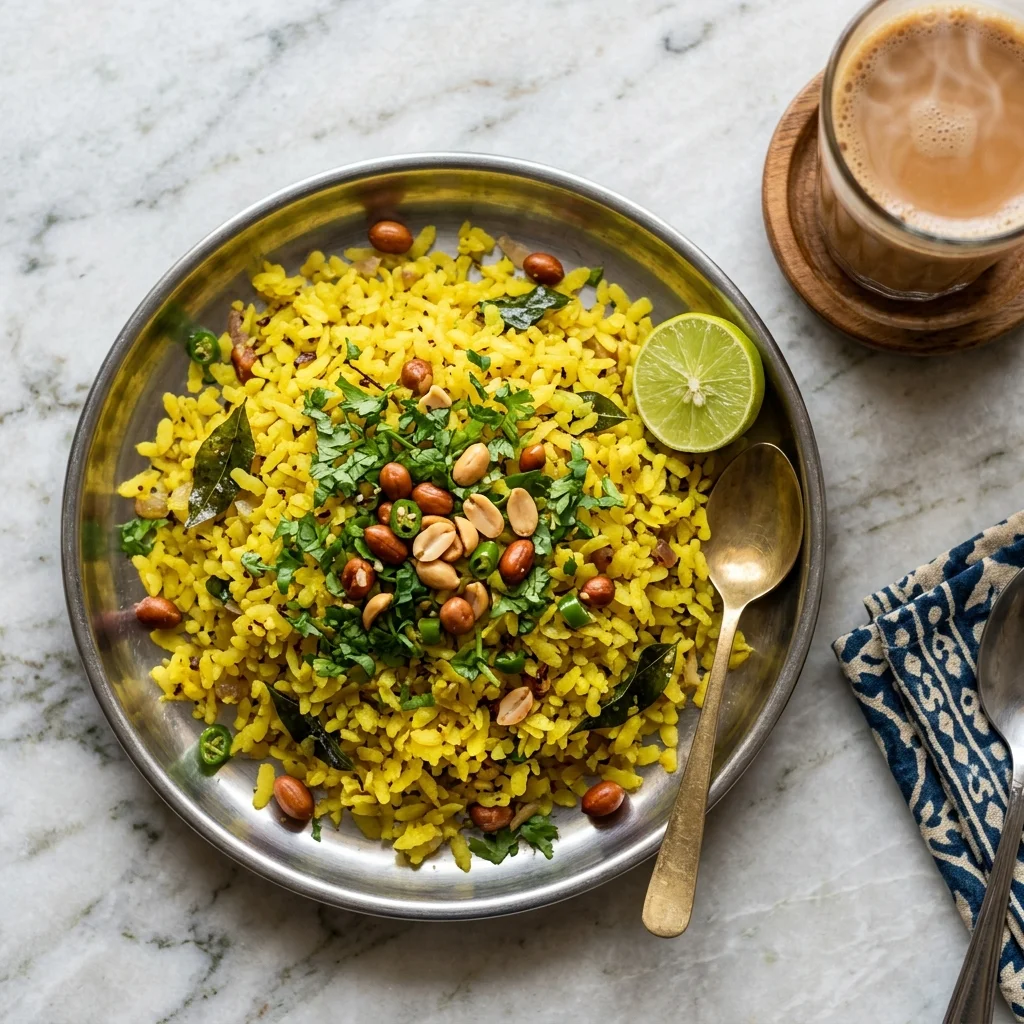
Nutrition Facts — per 100g
| Nutrient | Amount | % Daily Value |
|---|---|---|
| Calories | 130 kcal | 6% |
| Protein | 2.5g | 5% |
| Carbohydrates | 23.0g | 8% |
| Total Fat | 3.0g | 4% |
| Fiber | 1.2g | 4% |
| Sodium | 220.0mg | 10% |
Is Poha Good for You?
Yes, Poha is a nutritious breakfast option with beneficial carbohydrates and moderate protein content. A 100g serving provides 23g of carbohydrates (8% Daily Value) for sustained energy, along with 2.5g of protein (5% Daily Value) to support muscle maintenance. Its low calorie density at 130 kcal per 100g makes it a sensible choice for balanced eating.
Key Health Benefits of Poha
Light and Easily Digestible — Poha is a flattened rice product that breaks down readily in the digestive system, making it ideal for breakfast or recovery meals. Its mild nature suits those with sensitive stomachs or digestive concerns.
Low in Fat — With only 3g of total fat per 100g (4% Daily Value), Poha is naturally low in fat while still providing satisfying carbohydrates for energy without excess calories.
Moderate Calorie Content — At 130 kcal per 100g, it is a relatively light food that fits well into portion-controlled meals and weight management strategies without requiring extreme restriction.
Quick-Cooking Convenience — Beyond nutrition, Poha’s primary appeal is its speed—it hydrates in minutes without cooking, making it practical for busy mornings when you need breakfast fast.
Sodium Content for Electrolyte Balance — Each 100g serving contains 220mg of sodium (10% Daily Value), providing essential electrolytes that support hydration and nerve function, particularly valuable after exercise or in warm climates.
How Does Poha Compare?
Compared to regular cooked white rice, Poha is lighter and more convenient since it requires no cooking. While both are carbohydrate-rich, Poha’s flattened structure allows faster absorption and easier digestion, and it typically contains slightly less sodium unless specifically salted during preparation.
Frequently Asked Questions
How many calories is in poha?
Poha contains 130 calories per 100g, making it a low-calorie option for breakfast or light meals. A typical serving of about 50g would provide roughly 65 calories.
Is poha good for weight loss?
Yes, Poha can support weight loss efforts due to its low calorie density and light nature. Its moderate carbohydrate content (23g per 100g) provides sustained energy without excessive calories, though portion control and preparation method (avoiding excess oil or sugar) remain important.
Is poha high in fiber?
Poha contains 1.2g of fiber per 100g (4% Daily Value), which is modest compared to whole grain options. While it is not a significant fiber source, it still contributes to digestive health when paired with fiber-rich vegetables or toppings.
Is poha suitable for diabetics?
Poha can be included in a diabetic-friendly diet when portion-controlled and paired with protein or healthy fats to slow digestion. Its moderate carbohydrate content should be accounted for in daily carb counts, and individual blood sugar response may vary.
How should poha be stored?
Poha should be stored in an airtight container in a cool, dry place away from moisture and direct sunlight. Once opened, it is best consumed within 2-3 weeks to maintain freshness and prevent it from becoming stale or absorbing humidity.
How to Track Poha Nutrition with Gram
The Gram app makes logging Poha effortless—simply search for it in our database or use our AI food scanning feature to photograph your bowl and instantly capture nutritional details. You’ll see a complete breakdown of all macronutrients and micronutrients per serving, helping you stay accountable to your health goals throughout the day.
Frequently Asked Questions
How many calories is in poha?
Poha contains 130 calories per 100g, making it a low-calorie option for breakfast or light meals. A typical serving of about 50g would provide roughly 65 calories.
Is poha good for weight loss?
Yes, Poha can support weight loss efforts due to its low calorie density and light nature. Its moderate carbohydrate content (23g per 100g) provides sustained energy without excessive calories, though portion control and preparation method (avoiding excess oil or sugar) remain important.
Is poha high in fiber?
Poha contains 1.2g of fiber per 100g (4% Daily Value), which is modest compared to whole grain options. While it is not a significant fiber source, it still contributes to digestive health when paired with fiber-rich vegetables or toppings.
Is poha suitable for diabetics?
Poha can be included in a diabetic-friendly diet when portion-controlled and paired with protein or healthy fats to slow digestion. Its moderate carbohydrate content should be accounted for in daily carb counts, and individual blood sugar response may vary.
How should poha be stored?
Poha should be stored in an airtight container in a cool, dry place away from moisture and direct sunlight. Once opened, it is best consumed within 2-3 weeks to maintain freshness and prevent it from becoming stale or absorbing humidity.

Track your nutrition with Gram
Snap a photo of your meal and let AI do the rest. Track calories, macros, and micronutrients effortlessly.
Nutrition data sourced from USDA FoodData Central. Track poha and thousands of other foods with the Gram app.