
Ragi Dosa Nutrition Facts: Calories, Macros & Health Benefits
Summary: 100g of ragi dosa contains 170 calories, 4.5g protein, 28g carbs, and 3.5g fat. Ragi Dosa is a good source of essential vitamins and minerals.
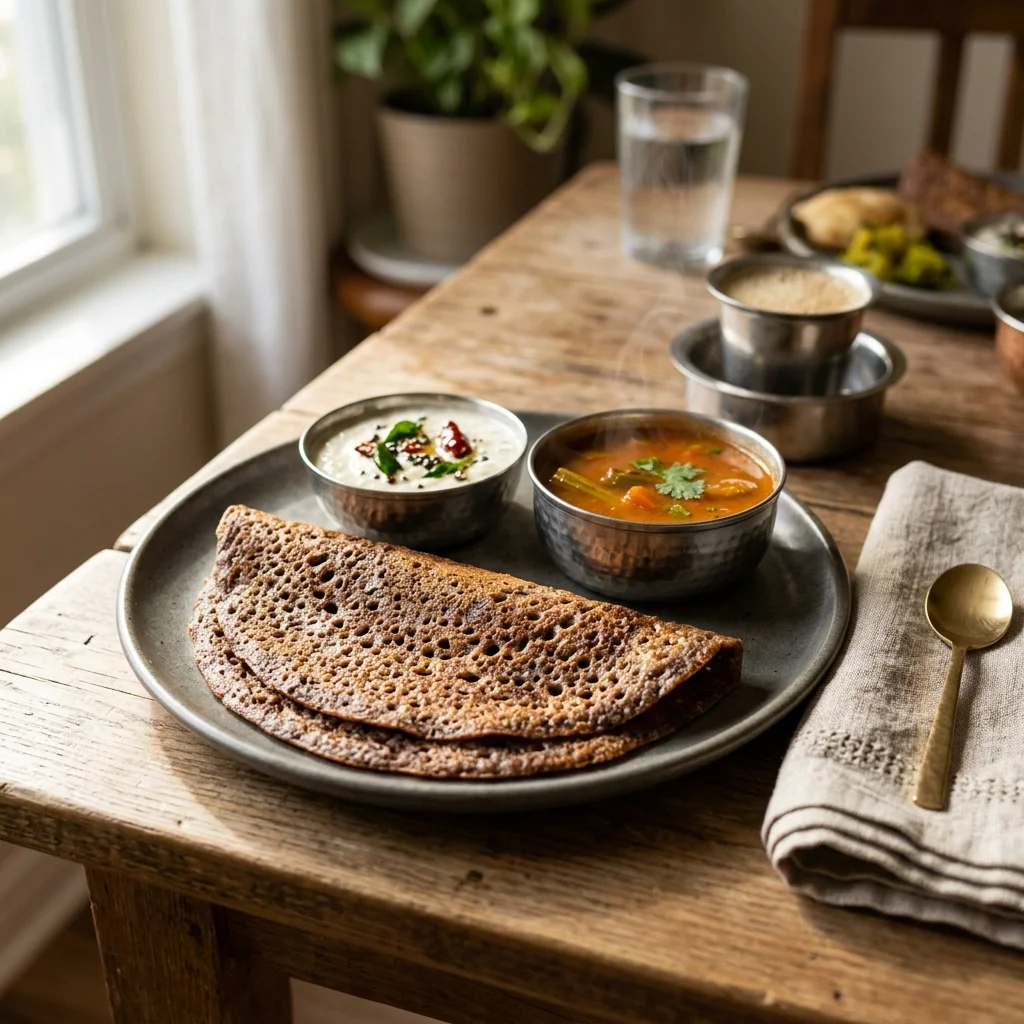
Nutrition Facts — per 100g
| Nutrient | Amount | % Daily Value |
|---|---|---|
| Calories | 170 kcal | 8% |
| Protein | 4.5g | 9% |
| Carbohydrates | 28.0g | 10% |
| Total Fat | 3.5g | 4% |
| Fiber | 3.2g | 11% |
| Sodium | 220.0mg | 10% |
Is Ragi Dosa Good for You?
Yes, Ragi Dosa is a nutritious choice that provides solid foundational nutrition. Each 100g serving delivers 4.5g of protein (9% Daily Value), 3.2g of fiber (11% Daily Value), and just 170 calories, making it a balanced option for those seeking whole-grain nutrition without excess calories.
Key Health Benefits of Ragi Dosa
Rich in Fiber for Digestive Health — With 3.2g of fiber per 100g (11% Daily Value), Ragi Dosa supports healthy digestion and can help maintain steady blood sugar levels throughout the day.
Plant-Based Protein Source — The 4.5g of protein per serving makes it a valuable option for vegetarians and anyone looking to diversify their protein intake beyond animal sources.
Low in Calories, High in Satiety — At only 170 calories per 100g, it is an efficient choice for weight management while the combination of fiber and protein helps you feel fuller longer.
Provides Essential Minerals — Ragi (finger millet) naturally contains calcium, iron, and magnesium, nutrients that support bone health, energy production, and muscle function.
Moderate Sodium Content — With 220mg of sodium per 100g (10% Daily Value), it is relatively balanced and suitable for those monitoring salt intake, especially compared to many processed breakfast foods.
How Does Ragi Dosa Compare?
Ragi Dosa stands out against regular rice dosa because it is made from finger millet instead of refined rice, delivering significantly more fiber (3.2g vs. typically less than 1g) and a lower glycemic impact. While both are popular South Indian breakfast staples, Ragi Dosa’s whole-grain base makes it the superior choice for sustained energy and digestive health.
Frequently Asked Questions
How many calories is in ragi dosa?
Ragi Dosa contains approximately 170 calories per 100g serving, making it a relatively light breakfast option that represents about 9% of a standard 2,000-calorie daily diet.
Is ragi dosa good for weight loss?
Yes, Ragi Dosa can support weight loss efforts because it is low in calories (170 per 100g) while providing substantial fiber (3.2g) and protein (4.5g) that promote satiety and reduce overall calorie intake throughout the day.
Does ragi dosa have gluten?
Ragi Dosa is naturally gluten-free because it is made from finger millet (ragi), making it an excellent breakfast choice for people with celiac disease or gluten sensitivity—though always verify that no wheat flour was added during preparation.
Is ragi dosa suitable for diabetics?
Ragi Dosa is generally a good choice for diabetics because finger millet has a low glycemic index and provides 3.2g of fiber per 100g, which helps moderate blood sugar spikes compared to refined grain alternatives.
How should I store leftover ragi dosa?
Leftover Ragi Dosa is best stored in an airtight container in the refrigerator for up to 2-3 days, and it can be reheated in a skillet or microwave; for longer storage, you can freeze the dosa batter for up to one month.
How to Track Ragi Dosa Nutrition with Gram
The Gram app makes logging Ragi Dosa effortless—simply search for it in our database or use our AI food scanner to photograph your meal and instantly capture all nutritional details. You’ll get a complete breakdown of calories, macronutrients, fiber, and sodium so you can see exactly how each serving fits into your daily nutrition goals.
Frequently Asked Questions
How many calories is in ragi dosa?
Ragi Dosa contains approximately 170 calories per 100g serving, making it a relatively light breakfast option that represents about 9% of a standard 2,000-calorie daily diet.
Is ragi dosa good for weight loss?
Yes, Ragi Dosa can support weight loss efforts because it is low in calories (170 per 100g) while providing substantial fiber (3.2g) and protein (4.5g) that promote satiety and reduce overall calorie intake throughout the day.
Does ragi dosa have gluten?
Ragi Dosa is naturally gluten-free because it is made from finger millet (ragi), making it an excellent breakfast choice for people with celiac disease or gluten sensitivity—though always verify that no wheat flour was added during preparation.
Is ragi dosa suitable for diabetics?
Ragi Dosa is generally a good choice for diabetics because finger millet has a low glycemic index and provides 3.2g of fiber per 100g, which helps moderate blood sugar spikes compared to refined grain alternatives.
How should I store leftover ragi dosa?
Leftover Ragi Dosa is best stored in an airtight container in the refrigerator for up to 2-3 days, and it can be reheated in a skillet or microwave; for longer storage, you can freeze the dosa batter for up to one month.
Track your nutrition with Gram
Snap a photo of your meal and let AI do the rest. Track calories, macros, and micronutrients effortlessly.
Nutrition data sourced from USDA FoodData Central. Track ragi dosa and thousands of other foods with the Gram app.