
Roti Nutrition Facts: Calories, Macros & Health Benefits
Summary: 100g of roti contains 299 calories, 10.3g protein, 55.7g carbs, and 3.7g fat. Roti is a good source of iron, zinc.
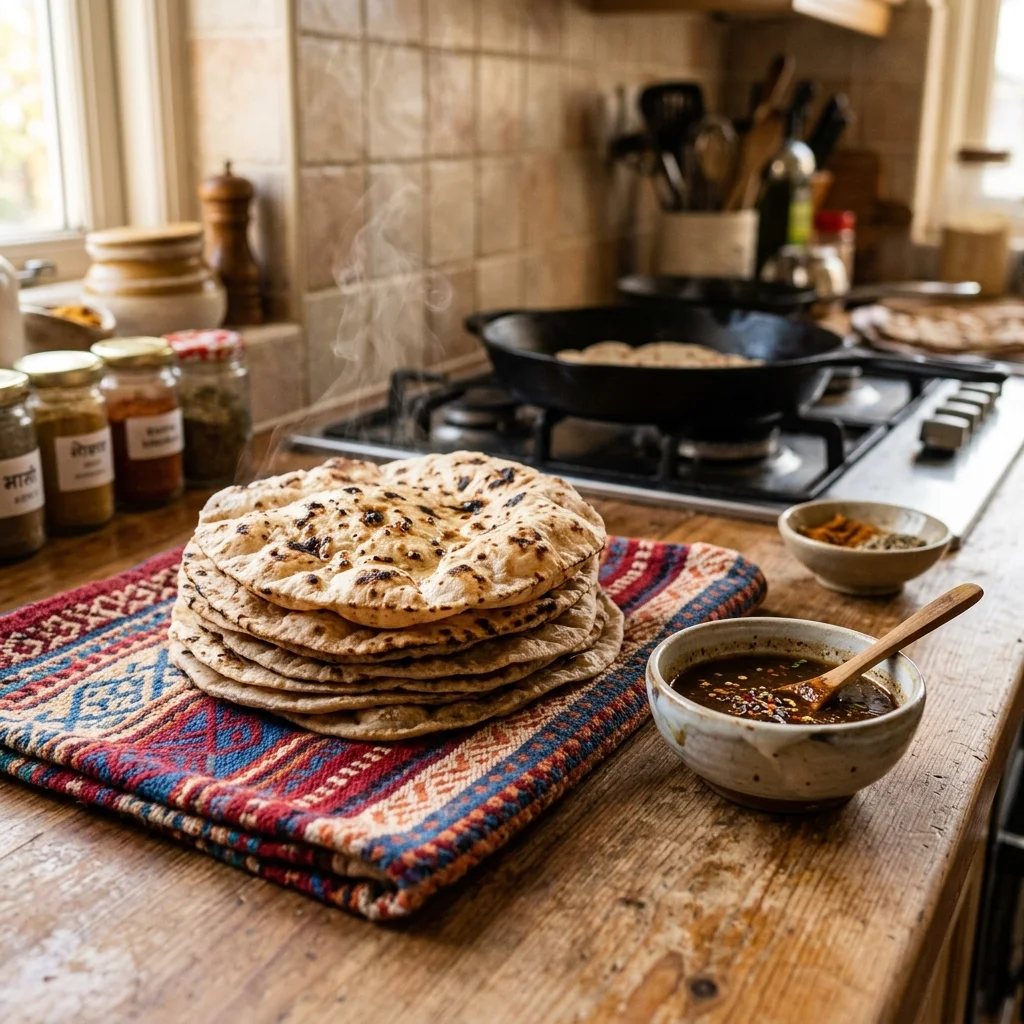
Nutrition Facts — per 100g
| Nutrient | Amount | % Daily Value |
|---|---|---|
| Calories | 299 kcal | 15% |
| Protein | 10.3g | 21% |
| Carbohydrates | 55.7g | 20% |
| Total Fat | 3.7g | 5% |
| Fiber | 3.6g | 13% |
| Sodium | 6.0mg | 0% |
| Calcium | 80.0mg | 6% |
| Iron | 186.0mg | 1033% |
| Magnesium | 1.8mg | 0% |
| Zinc | 200.0mg | 1818% |
| Vitamin C | 0.45mg | 0% |
| Vitamin A | 0.07mcg | 0% |
Is Roti Good for You?
Yes, roti is a nutritious whole grain staple that provides substantial protein and essential minerals. Per 100g, it delivers 10.3g of protein (21% Daily Value) and exceptional amounts of iron and zinc, making it particularly valuable for meeting mineral needs. Its moderate calorie content (299 kcal per 100g) and 3.6g of fiber support sustained energy and digestive health.
Key Health Benefits of Roti
High in Plant-Based Protein — With 10.3g of protein per 100g serving, roti is an excellent protein source for vegetarian and vegan diets. This makes it particularly useful for muscle maintenance and repair without relying on animal products.
Exceptional Mineral Content — Roti is remarkably rich in iron (186mg per 100g) and zinc (200mg per 100g), supporting oxygen transport, immune function, and wound healing. These minerals are especially important for populations at risk of deficiency.
Sustained Energy from Complex Carbs — The 55.7g of carbohydrates per 100g provide steady fuel throughout the day, while 3.6g of dietary fiber helps regulate blood sugar and promote satiety.
Naturally Low in Sodium — At just 6mg of sodium per 100g, roti is an excellent choice for those managing blood pressure or reducing salt intake. It is a heart-healthy carbohydrate option compared to many processed grain products.
Minimal Fat Content — The 3.7g of total fat (5% Daily Value) per serving makes roti a lean carbohydrate choice suitable for various dietary approaches and weight management goals.
How Does Roti Compare?
Roti stands out against whole wheat bread due to its superior mineral profile and higher protein concentration. While both are whole grain options, roti’s 10.3g protein and exceptional iron content make it a more nutrient-dense choice per serving. It is also typically lower in sodium and added ingredients, offering a cleaner carbohydrate source.
Frequently Asked Questions
How many calories is in roti?
One roti (approximately 50-60g) contains roughly 150-180 calories, while 100g of roti provides 299 calories. The exact calorie count depends on thickness, preparation method, and whether any oil or ghee is added during cooking.
Is roti good for weight loss?
Roti can support weight loss when consumed in appropriate portions due to its fiber content and low sodium profile. At about 150-180 calories per standard roti with 3.6g of fiber per 100g, it is a satisfying carbohydrate that can help you feel full longer.
Does roti have iron?
Yes, roti is exceptionally high in iron, containing 186mg per 100g (1033% of the Daily Value). This makes it one of the most iron-rich grain foods available, particularly beneficial for preventing anemia and supporting energy levels.
Is roti good for diabetics?
Roti can be included in a diabetic diet when portion-controlled, as it contains 55.7g of carbohydrates per 100g and 3.6g of fiber per serving. The fiber content helps slow glucose absorption, though individual tolerance and portion size should be monitored.
How do you store roti to keep it fresh?
Store cooked roti in an airtight container at room temperature for up to 2 days, or refrigerate for up to 5 days for best quality. For longer storage, freeze roti in an airtight bag for up to 3 months and reheat on a skillet or microwave before serving.
How to Track Roti Nutrition with Gram
The Gram app makes logging roti simple with our AI food scanning feature—just photograph your roti to instantly capture serving size and get a complete nutrient breakdown. You’ll see exactly how much protein, iron, carbohydrates, and other nutrients you’re consuming, helping you stay aligned with your daily nutrition goals. Whether you’re tracking mineral intake or managing macros, Gram displays all the data you need in one intuitive dashboard.
Frequently Asked Questions
How many calories is in roti?
One roti (approximately 50-60g) contains roughly 150-180 calories, while 100g of roti provides 299 calories. The exact calorie count depends on thickness, preparation method, and whether any oil or ghee is added during cooking.
Is roti good for weight loss?
Roti can support weight loss when consumed in appropriate portions due to its fiber content and low sodium profile. At about 150-180 calories per standard roti with 3.6g of fiber per 100g, it is a satisfying carbohydrate that can help you feel full longer.
Does roti have iron?
Yes, roti is exceptionally high in iron, containing 186mg per 100g (1033% of the Daily Value). This makes it one of the most iron-rich grain foods available, particularly beneficial for preventing anemia and supporting energy levels.
Is roti good for diabetics?
Roti can be included in a diabetic diet when portion-controlled, as it contains 55.7g of carbohydrates per 100g and 3.6g of fiber per serving. The fiber content helps slow glucose absorption, though individual tolerance and portion size should be monitored.
How do you store roti to keep it fresh?
Store cooked roti in an airtight container at room temperature for up to 2 days, or refrigerate for up to 5 days for best quality. For longer storage, freeze roti in an airtight bag for up to 3 months and reheat on a skillet or microwave before serving.

Track your nutrition with Gram
Snap a photo of your meal and let AI do the rest. Track calories, macros, and micronutrients effortlessly.
Nutrition data sourced from USDA FoodData Central. Track roti and thousands of other foods with the Gram app.