
Toast Nutrition Facts: Calories, Macros & Health Benefits
Summary: 100g of toast contains 313 calories, 10.4g protein, 57g carbs, and 4.1g fat. Toast is a good source of sodium.
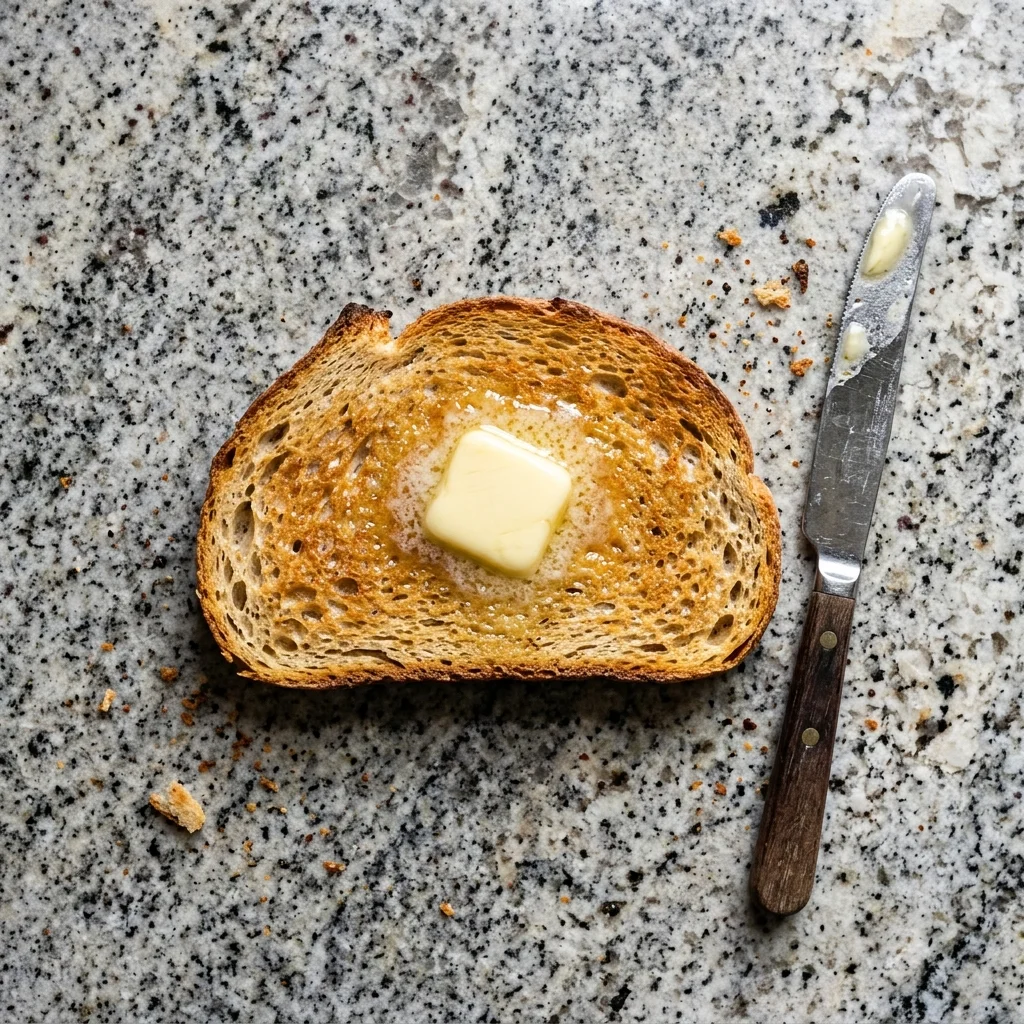
Nutrition Facts — per 100g
| Nutrient | Amount | % Daily Value |
|---|---|---|
| Calories | 313 kcal | 16% |
| Protein | 10.4g | 21% |
| Carbohydrates | 57.0g | 21% |
| Total Fat | 4.1g | 5% |
| Fiber | 3.4g | 12% |
| Sodium | 601.0mg | 26% |
Is Toast Good for You?
Yes, toast is good for you when made from whole grain bread. Per 100g, it provides 10.4g of protein (21% Daily Value) and 3.4g of fiber (12% Daily Value), both supporting muscle maintenance and digestive health. It is also a solid source of carbohydrates at 57g (21% Daily Value) with relatively low fat at 4.1g (5% Daily Value).
Key Health Benefits of Toast
Supports Muscle and Tissue Repair — Toast delivers 10.4g of protein per 100g, which is 21% of your daily need. Protein is essential for building and maintaining lean muscle mass throughout the day.
Promotes Digestive Health — With 3.4g of fiber per 100g (12% Daily Value), toast supports a healthy digestive system and helps maintain stable blood sugar levels when made from whole grain varieties.
Provides Sustained Energy — The 57g of carbohydrates per 100g (21% Daily Value) make toast an efficient energy source. It is particularly valuable as a breakfast food to fuel your morning activities.
Low in Fat — At just 4.1g of total fat per 100g (5% Daily Value), toast is a heart-friendly carbohydrate option that won’t add excessive calories from fat to your diet.
Quick Nutrient Delivery — Toast is easy to digest and absorb, making its nutrients readily available to your body. It is an excellent choice for post-workout recovery or starting your day with quick energy.
How Does Toast Compare?
Toast is comparable to plain bread but offers slight nutritional advantages depending on preparation. Compared to bagels, toast typically has lower calories and less sodium while delivering similar protein content. What sets toast apart is its versatility—it is the same bread in a more digestible form, with enhanced bioavailability of certain nutrients due to the toasting process.
Frequently Asked Questions
How many calories are in toast?
Toast contains 313 calories per 100g. A typical slice of toast (about 30g) contains approximately 94 calories, though this varies based on bread type and thickness.
Is toast good for weight loss?
Yes, toast can support weight loss when made from whole grain bread. It is high in protein (10.4g per 100g) and fiber (3.4g per 100g), both of which promote satiety and help reduce overall calorie intake throughout the day.
How much sodium is in toast?
Toast contains 601mg of sodium per 100g, which represents 26% of your daily value. This relatively high sodium content comes from salt added during bread production, so those monitoring sodium intake should check individual bread labels.
Is toast keto-friendly?
No, toast is not suitable for a ketogenic diet. With 57g of carbohydrates per 100g (21% Daily Value) and only 4.1g of fat, it is far too high in carbs and too low in fat to maintain ketosis.
How should you store toast, and how long does it last?
Toast is best consumed immediately after toasting for optimal texture and taste. If you need to store it, keep cooled toast in an airtight container at room temperature for up to 2 days, or freeze it for up to 3 months and reheat as needed.
How to Track Toast Nutrition with Gram
Logging toast into the Gram app is simple—just snap a photo of your slice and our AI food scanning technology instantly identifies it and pulls up the complete nutritional breakdown. You’ll see all macronutrients and micronutrients mapped to your daily goals in seconds. It is the fastest way to stay on top of your nutrition without manual entry or guesswork.
Frequently Asked Questions
How many calories are in toast?
Toast contains 313 calories per 100g. A typical slice of toast (about 30g) contains approximately 94 calories, though this varies based on bread type and thickness.
Is toast good for weight loss?
Yes, toast can support weight loss when made from whole grain bread. It is high in protein (10.4g per 100g) and fiber (3.4g per 100g), both of which promote satiety and help reduce overall calorie intake throughout the day.
How much sodium is in toast?
Toast contains 601mg of sodium per 100g, which represents 26% of your daily value. This relatively high sodium content comes from salt added during bread production, so those monitoring sodium intake should check individual bread labels.
Is toast keto-friendly?
No, toast is not suitable for a ketogenic diet. With 57g of carbohydrates per 100g (21% Daily Value) and only 4.1g of fat, it is far too high in carbs and too low in fat to maintain ketosis.
How should you store toast, and how long does it last?
Toast is best consumed immediately after toasting for optimal texture and taste. If you need to store it, keep cooled toast in an airtight container at room temperature for up to 2 days, or freeze it for up to 3 months and reheat as needed.

Track your nutrition with Gram
Snap a photo of your meal and let AI do the rest. Track calories, macros, and micronutrients effortlessly.
Nutrition data sourced from USDA FoodData Central. Track toast and thousands of other foods with the Gram app.